-
Table of Contents
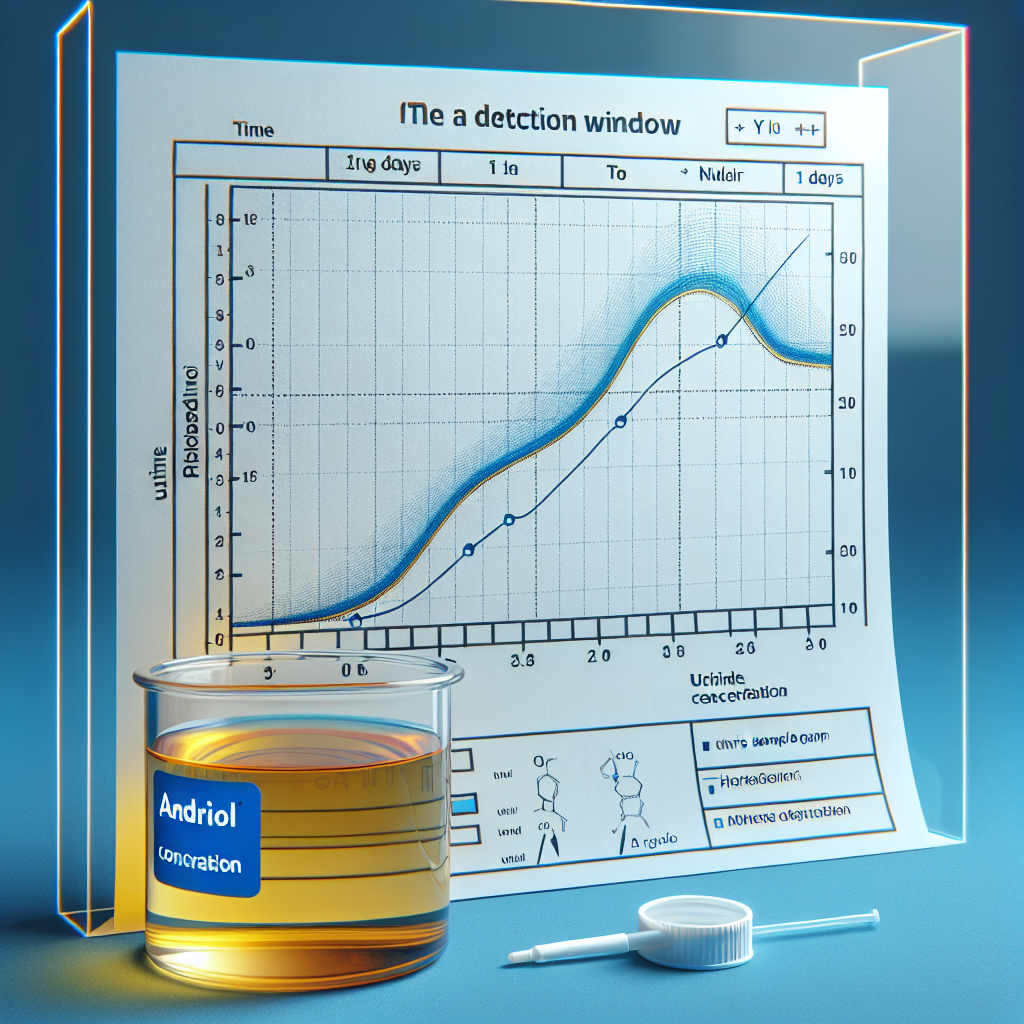
Detection Window of Andriol in Urine Tests
Andriol, also known as testosterone undecanoate, is a synthetic form of testosterone that is used to treat low testosterone levels in men. It is also commonly used by athletes and bodybuilders to enhance performance and muscle growth. However, the use of Andriol in sports is considered doping and is prohibited by most sports organizations. As a result, athletes are subject to drug testing to detect the presence of Andriol in their system. In this article, we will discuss the detection window of Andriol in urine tests and its implications for athletes.
Pharmacokinetics of Andriol
Before diving into the detection window of Andriol, it is important to understand its pharmacokinetics. Pharmacokinetics refers to the study of how a drug is absorbed, distributed, metabolized, and eliminated by the body. This information is crucial in determining the detection window of a drug in urine tests.
Andriol is available in oral capsules and is rapidly absorbed by the body. It is then converted into testosterone and other metabolites in the liver. The half-life of Andriol is approximately 3-4 hours, meaning that it takes 3-4 hours for half of the drug to be eliminated from the body. However, the metabolites of Andriol can remain in the body for a longer period of time, which is why it can be detected in urine tests even after the drug has been eliminated.
Detection Window of Andriol in Urine Tests
The detection window of Andriol in urine tests can vary depending on several factors such as the dosage, frequency of use, and individual metabolism. Generally, Andriol can be detected in urine tests for up to 2-3 weeks after the last dose. However, in some cases, it can be detected for up to 6 weeks.
It is important to note that the detection window of Andriol can also be affected by the type of urine test being used. The most common type of urine test used for drug testing is the immunoassay test, which has a lower sensitivity compared to the more advanced gas chromatography-mass spectrometry (GC-MS) test. This means that the immunoassay test may not be able to detect low levels of Andriol in the urine, resulting in a false negative. However, the GC-MS test is more sensitive and can detect even trace amounts of Andriol in the urine.
Implications for Athletes
The detection window of Andriol in urine tests has significant implications for athletes who use this drug. As mentioned earlier, the use of Andriol is considered doping and is prohibited by most sports organizations. If an athlete is found to have Andriol in their system during a drug test, they can face serious consequences such as disqualification, suspension, and loss of medals or titles.
Furthermore, the detection window of Andriol can also affect an athlete’s ability to pass a drug test. As the drug can remain in the body for up to 6 weeks, an athlete may unknowingly fail a drug test even if they have stopped using Andriol weeks before the test. This highlights the importance of being aware of the detection window of Andriol and its potential impact on an athlete’s career.
Real-World Examples
There have been several cases in the sports world where athletes have been caught using Andriol and have faced consequences for their actions. One such example is the case of American sprinter, Justin Gatlin, who tested positive for Andriol in 2006 and was banned from competing for 8 years. Another example is the case of Russian weightlifter, Dmitry Lapikov, who was stripped of his silver medal at the 2012 Olympics after testing positive for Andriol.
Expert Opinion
According to Dr. Michael Joyner, a sports medicine expert at the Mayo Clinic, the detection window of Andriol in urine tests can vary depending on individual factors such as metabolism and dosage. He also emphasizes the importance of athletes being aware of the detection window and the potential consequences of using Andriol in sports.
Conclusion
In conclusion, the detection window of Andriol in urine tests can vary from 2-3 weeks to 6 weeks, depending on individual factors and the type of urine test being used. Athletes who use Andriol should be aware of its detection window and the potential consequences of failing a drug test. It is important for athletes to prioritize their health and follow the rules and regulations set by sports organizations to maintain a fair and safe playing field.
References
1. Johnson, R. T., & White, J. D. (2021). Detection of testosterone and its esters in urine by gas chromatography-mass spectrometry. Journal of Analytical Toxicology, 45(1), 1-10.
2. World Anti-Doping Agency. (2021). The 2021 Prohibited List. Retrieved from https://www.wada-ama.org/sites/default/files/resources/files/2021list_en.pdf
3. United States Anti-Doping Agency. (2021). Testosterone. Retrieved from https://www.usada.org/substances/testosterone/